01
Every repository invents its own way of working.
Different CI/CD, release and configuration patterns for problems that should be solved once. Each team ends up maintaining its own solutions, and shared improvements take longer to reach everyone.
 Firestartr
Firestartr is an open-source framework for building internal developer platforms. It connects domains, systems, components, teams and infrastructure so your platform can create, deploy and evolve software with clear rules.
Firestartr starts by making your software visible. Then it turns that knowledge into repeatable, reviewable automation.
Different CI/CD, release and configuration patterns for problems that should be solved once. Each team ends up maintaining its own solutions, and shared improvements take longer to reach everyone.
Systems and dependencies exist, but nobody shares a clear view of how they fit together. Without that map, understanding the impact of a change or who it affects means rebuilding the context every time.
When ownership, permissions and infrastructure live apart, operating becomes slow and risky. Decisions get stuck, and resolving an incident can start with figuring out who should act.
Firestartr organizes software around the same boundaries the business recognizes. Each level gives context to the next.
Group the systems serving one part of the business.
Define functional boundaries with clear responsibility.
Connect a software unit to its repository.
Make ownership of every component visible.
Add reusable capabilities to a repository.
Keep supporting resources beside the software using them.
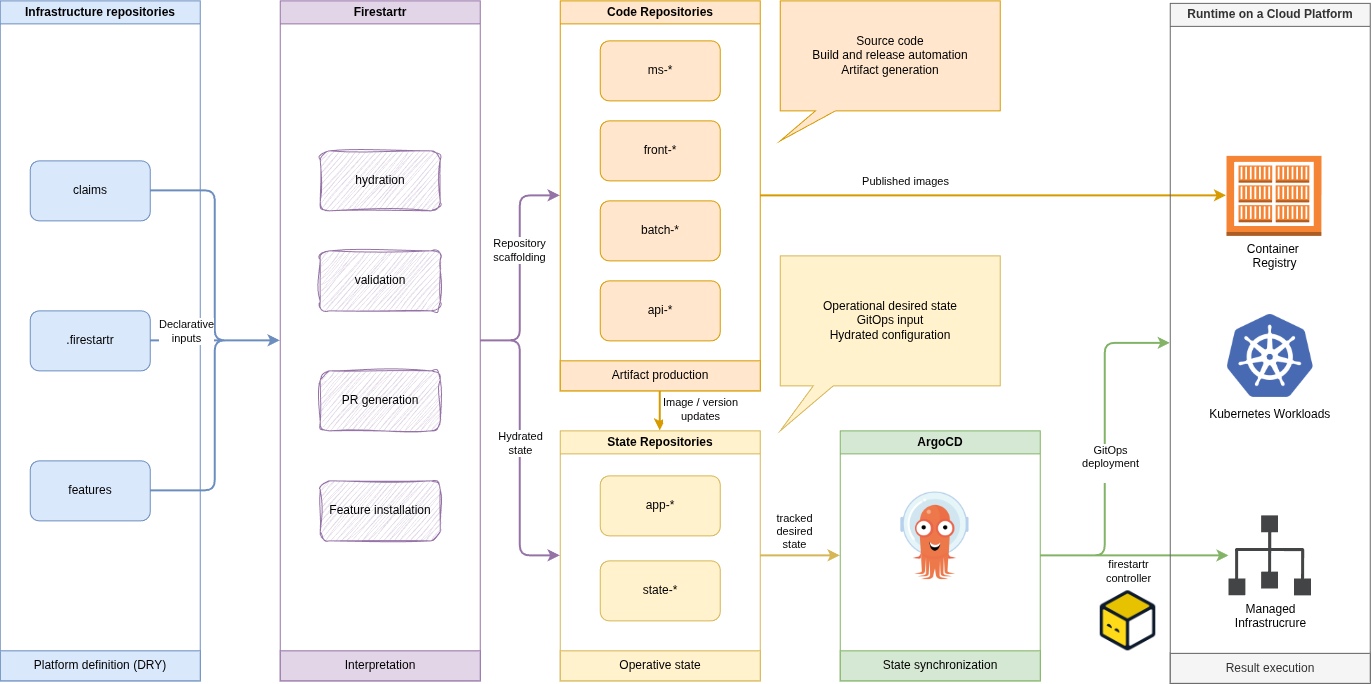
Infrastructure repositories define the platform. Firestartr interprets those inputs, scaffolds code and state repositories, and connects desired state to the runtime.
GitHub, Firestartr Portal and Skill express different instructions, but they all act on the same representation of your organization.
Repositories, reviews and workflows live here, applying changes to the model.
Browse the catalog, find ownership, and provision or update resources through guided flows.
Describe a change in plain language: an agent interprets your organization and safely runs Firestartr operations.
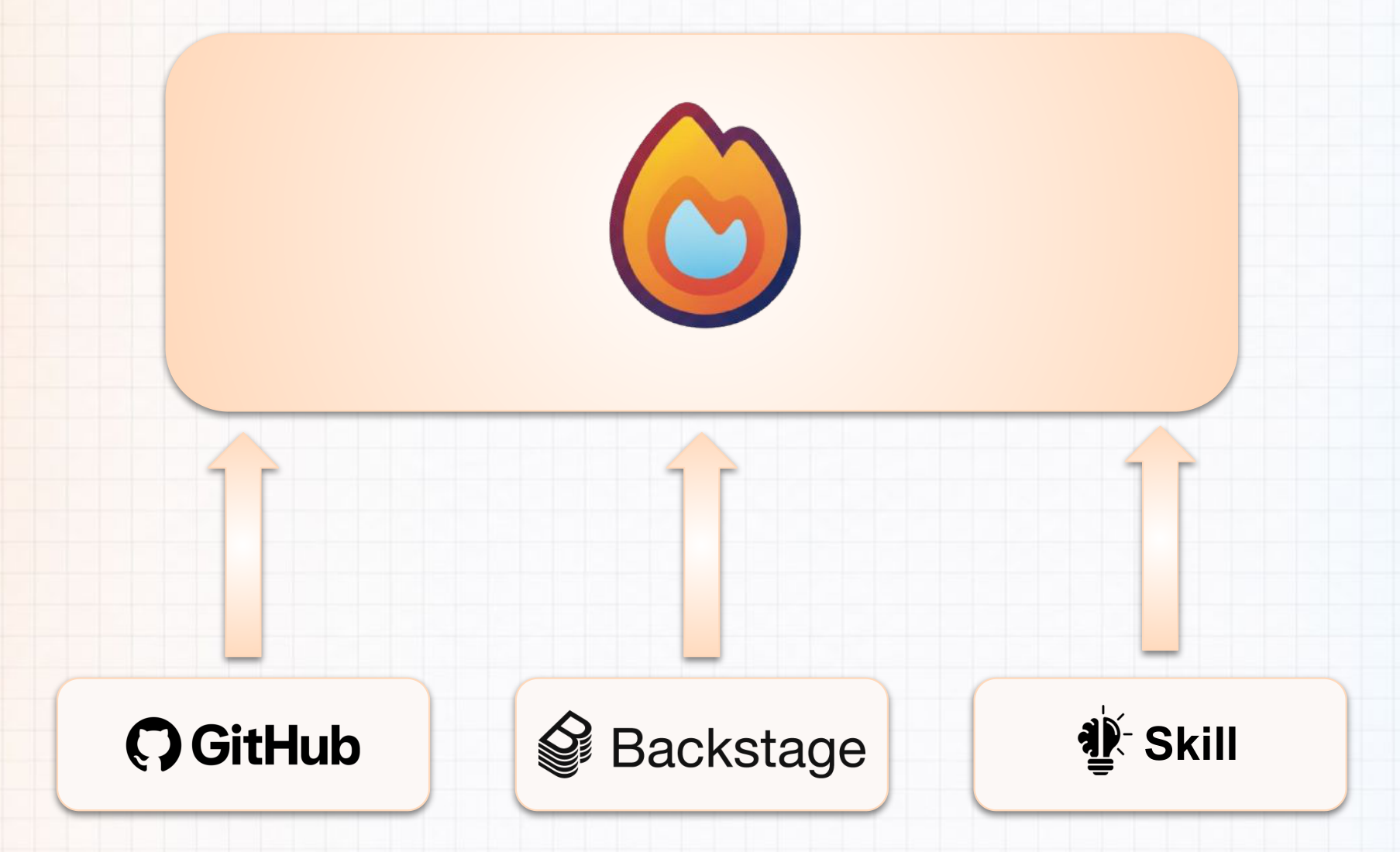
Your team keeps working in GitHub and Backstage. Firestartr connects those surfaces through a shared model and adds automation with repositories, workflows and pull requests, without imposing another place to work.
GitHub, Backstage and Skill connect to the same model.
Configuration and workflows live in your organization’s repositories.
Changes are validated and can be reviewed before they are applied.
Your agents work against your organization’s map instead of guessing how it is structured. Claims go through deterministic policy checks, and changes follow reviewable flows such as pull requests, keeping your team in control before they are applied.
An instruction does not jump straight to production. Firestartr interprets it against the map, generates the change and keeps human review in the flow.
Describe the change your team needs.
Place the change in your organization’s context.
Check the rules before proposing changes.
Your team reviews and approves before applying.
The approved state reaches your platform.
Provision repositories, systems, teams and workspaces through a guided flow: configure, review, create and track progress.
Read the documentation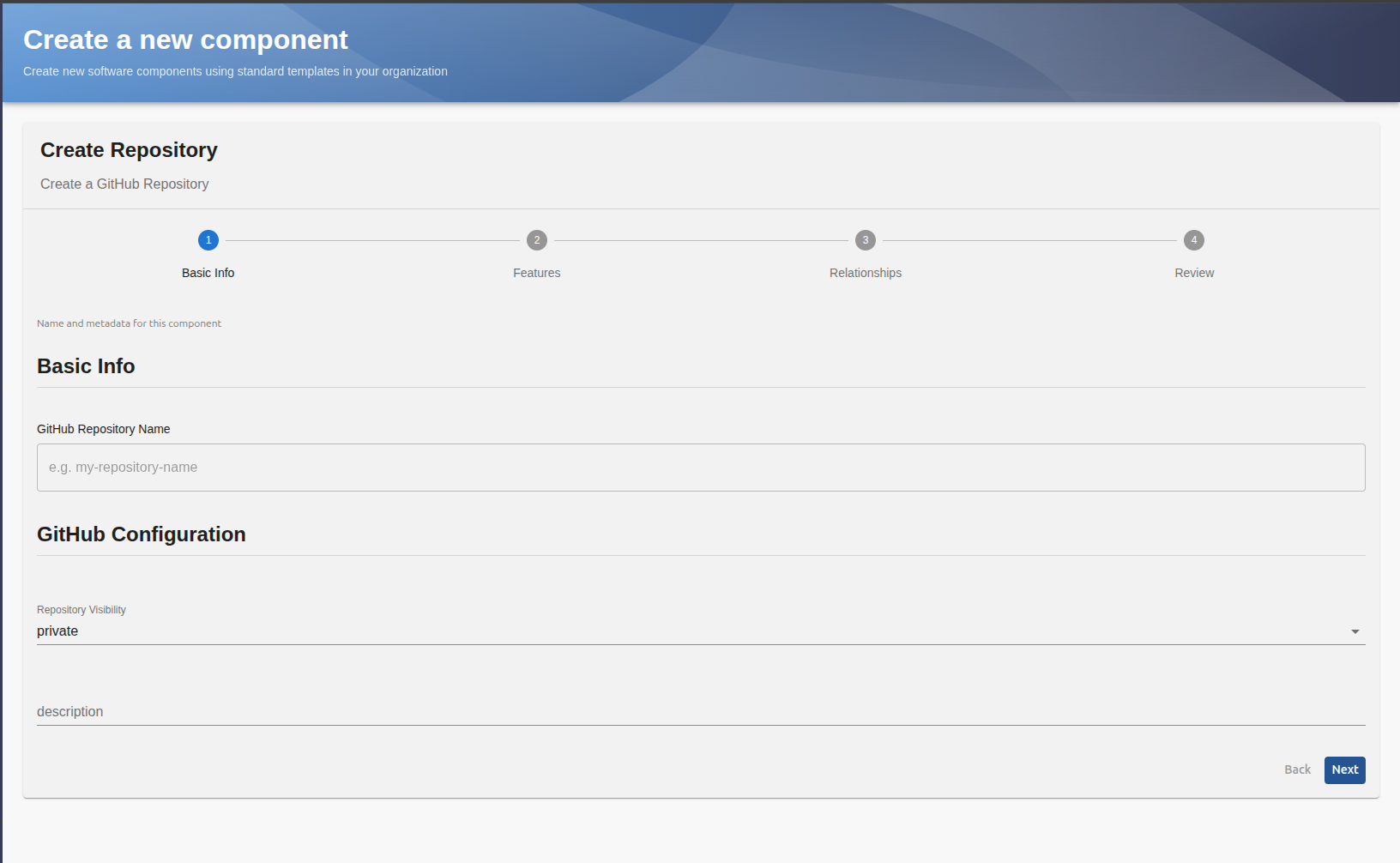
A Feature composes the files, workflows and configuration a component needs. The platform evolves without repeating work for every team.
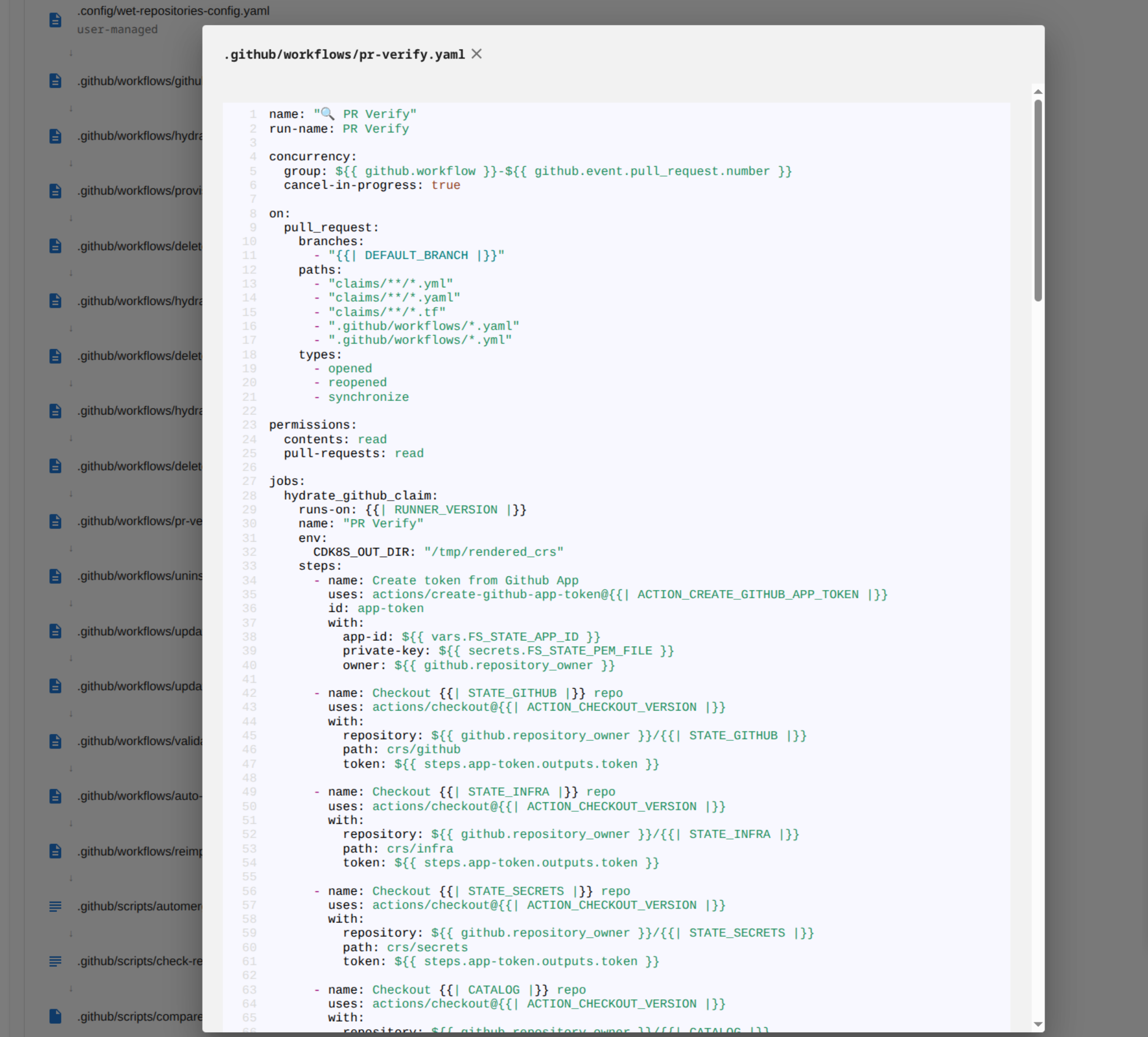
From a new image to an infrastructure update, Firestartr keeps changes in Git and carries them to environments through a traceable flow.
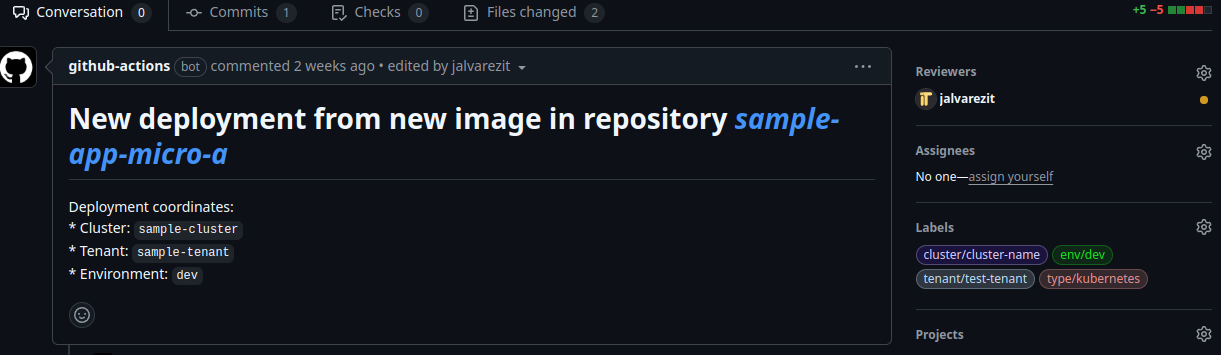
Your organization’s configuration and state repositories are the source of truth. Changes are versioned and reviewable; depending on the workflow, pipelines apply them or Argo CD syncs them from Git.
Application and infrastructure configuration stays versioned in Git.
Pull requests show what will change before you approve it.
Workflows or Argo CD apply the state you have defined.
Rules check each change before it is accepted, preventing configurations that break your standards.
Changes stay visible to the team, who can review and approve them before they are applied.
Federated identity grants temporary access without storing long-lived keys.
Compare actual and desired state to spot differences and restore the declared configuration.
Apply the same change consistently, whether it targets a single resource or many.